Stage Three Assessment

Firefighter Technical Skills Assessment

The Firefighter Technical Skills Assessments are based on bona fide occupational requirements and evaluate whether candidates can perform six firefighting evolutions safely, correctly, and within the required time limits.

The assessment is divided into Section One and Section Two. Each section contains three skills, and all six evaluations must be passed to achieve a successful overall result.

Each candidate is given specific instructions and must perform every evaluation exactly as directed by the evaluator and in the safest manner possible. Candidates may review the instructions for up to 5 minutes before the evaluation begins and may request one re-read during the evolution. The clock does not stop during a re-read.

Re-reads are not considered during dispute resolution. The testing grounds can be noisy, and comprehension may be affected by the time-sensitive nature of the assessment. Candidates should review the official orientation materials in advance.

You must pass all 6 evaluations to pass this assessment.

Stage Three at a glance

Key Firefighter Technical Skills Assessment rules before you book

This section summarizes the operating rules, retest requirements, and candidate responsibilities that apply across both sections of the Firefighter Technical Skills Assessment.

Assessment format

Two sections, six total evolutions

Section One and Section Two each contain three skills for a total of six timed technical evolutions.

Timing rule

10 minutes per evolution

Each evolution has a maximum time limit of 10 minutes.

Retest rule

Section-based retesting applies

If you fail a skill in only one section, you re-book the failed section. If you fail one skill in both sections, you must re-test both sections together.

Overall validity window

Both sections must be passed within 6 months

If both sections are not passed within six months, you must re-test the entire Firefighter Technical Skills Assessment.

Candidate readiness

Formal firefighter training is strongly advised

Formal firefighter training should be completed before attempting the six evolutions. The skills are based on occupational requirements and draw from NFPA 1001 and IFSTA Essentials of Firefighting.
Ropes and knots skill

Clinical screening

Pre-appraisal screening before technical skills begin

All candidates complete pre-appraisal screening before continuing with the technical skills assessment. This review is used to identify candidates for whom the physical activity may be inappropriate on that specific day.

Screening components

Medical questionnaire review

A medical officer reviews the informed consent form, the OFAI Medical Questionnaire, and when required, the OFAI Medical Clearance Form.

Physician clearance may be required

Candidates who answer “Yes” to any Medical Questionnaire item must consult with their physician and submit the required clearance before participating.

Blood pressure and heart rate

Candidates receive up to six readings for blood pressure and resting heart rate. If vitals remain outside the acceptable range after six readings, the assessment cannot proceed that day.

Not considered a fail

If pre-appraisal screening stops you from continuing, it is not considered a fail. It means it is not safe to proceed with testing on that date.

Doctor’s notes are not accepted

Doctor’s notes are not accepted in place of passing on-site blood pressure and heart rate readings.

Pregnancy

Candidates who are pregnant should obtain medical clearance before registering and should contact the OFAI Administration office for further guidance.

Stage Three – Firefighter Technical Skills Assessment: Section One

Current Authoritative OFAI Reference
Last Updated April 12, 2026

Claustrophobia Assessment

  1. Don full Personal Protective Equipment including SCBA and a blacked-out face mask.
  2. Approach structure, on air, and enter the structure when advised by evaluator.
  3. Navigate your way through the entire maze, passing each obstacle as they are encountered.
  4. You must exit at the point of entry – once you’ve navigated the entire maze.
  5. Remain in a crawl position. Any attempt to stand up, squat, crawl outside of, or remove obstacles while inside maze will constitute a failure.
  6. Partial or full removal of your SCBA is not permitted and will also result in failure.
  7. If you feel uncomfortable inside the maze, please advise your evaluator. The evaluation will end, and it will be considered a failure.

You have 10 minutes to complete this assessment.

Last Updated April 12, 2026

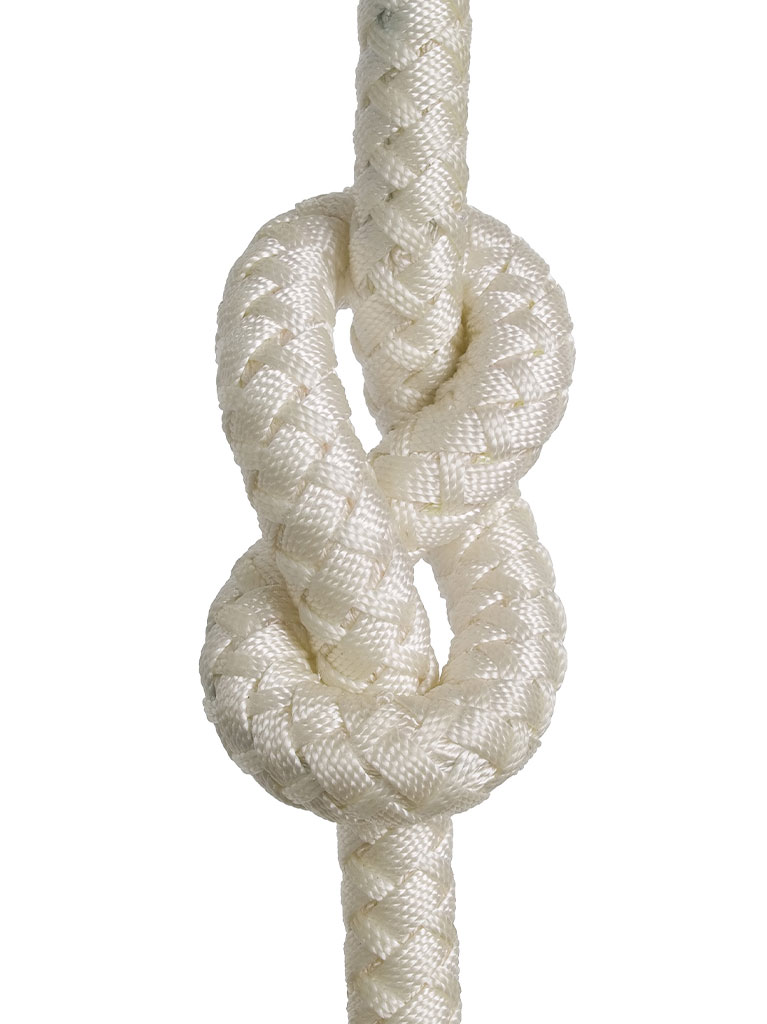
Ropes and Knots

  1. You must be dressed in full PPE (Personal Protective Equipment) and SCBA (not on air).
  2. You must demonstrate the proper forming of five knots and explain the fundamental purpose (as described in IFSTA 7) of each knot to the evaluator.

The knots are as follows:

  • Overhand Safety
  • Clove Hitch
  • Figure-Eight
  • Figure-Eight on a Bight
  • Figure-Eight follow through
  1. The evaluator will prompt you with the knot you must tie, you are not required to memorize this list.
  2. You will be advised if you are correct or incorrect after the tying of each knot.
  3. If you are incorrect, you must re-attempt creating that knot until you are successful.
  4. You must correctly tie and explain all five knots to proceed to the next part of this evaluation.
  5. You will then be required to demonstrate the practical application of two knots in preparation for hoisting equipment. You are not required to hoist the equipment.

The knot applications are as follows:

  • Hoisting a Ladder using a Figure-Eight on a Bight, Clove Hitch, and Overhand Safety.
  • Hoisting a Power Saw using two Figure-Eight Follow throughs.

Due to the various sequential steps required to complete a finished knot properly, the evaluator will primarily evaluate the finished knot for accurateness compared to the IFSTA 7 Essentials Manual. The completed knots must be identical to the illustrations found in this manual.

You have 10 minutes to complete this assessment.

Last Updated April 12, 2026

Ladder Component Identification and 10M Ladder Climb

  1. You must be dressed in full PPE (Personal Protective Equipment) and SCBA (not on air).
  2. You will be required to wear a safety harness for this skill.
  3. You must correctly identify ten components of a roof and extension ladder. These components will be indicated to you by the evaluator. You will have two attempts to correctly identify all ten components. Once you’ve identified all components correctly, the evaluator will allow you to proceed with the remainder of the assessment. If you do not correctly identify all components after two attempts, you will fail the assessment.
  4. When advised to proceed by the evaluator, climb the 10m ladder until you encounter a green taped rung. You will perform the appropriate leg lock and retrieve an axe from the ground. Once you’ve retrieved the axe you will continue to climb the ladder until you reach the red taped rung.
  5. Once you’ve reached the red taped rung, perform a leg lock – left or right is acceptable for this rung. Remove the leg lock and continue climbing up the ladder until you reach the balcony. Place the axe on balcony, safely step off the ladder and onto the balcony, and ring the bell.
  6. Safely climb back onto the ladder, retrieve the axe, and descend until you reach the ground.

You have 10 minutes to complete this assessment.

Stage Three – Firefighter Technical Skills Assessment: Section Two

Current Authoritative OFAI Reference
Last Updated April 12, 2026

Roof Operations-Inspection Hole

  1. You must be dressed in full PPE (Personal Protective Equipment) and SCBA, on air, to perform this skill.
  2. You must take the required equipment up the roof ladder to create an inspection hole on the roof. You must correctly deploy the roof ladder and demonstrate the actions required to determine the roof is safe to work on.
  3. Once positioned on the roof, cut a square inspection hole at the spot indicated by the evaluator following the correct order of cuts.
  4. You must cut between the two painted lines and safely remove the entire inner square ONLY.
  5. You will advise the evaluator when you have completed cutting your hole and ask the evaluator if you can proceed.
  6. If the hole exceeds the outer square, you will automatically fail.
  7. If the hole size is too small, the evaluator will allow you to correct the size.
  8. Once the evaluator advises you can proceed, safely climb down the ladder, and return to the ground.

You have 10 minutes to complete this assessment.

Last Updated April 12, 2026

Hose Connections and Advancing Hose line

  1. You must be dressed in full PPE (Personal Protective Equipment) and SCBA (not on air).
  2. Make all connections with the appropriate hoses and appliances provided. You must assemble hoses and appliances safely and properly, as you would on a fire ground.
  3. Install the hydrant gate valve in the correct location.
  4. Establish a water supply from the hydrant with a 100mm hose to the pump panel.
  5. From the pump panel discharge, deploy two lengths of 65mm hose. Attach gated wye and connect two 45mm attack lines.
  6. Connect a nozzle to each 45mm attack line.
  7. You will advise the evaluator when you establish these connections and ask the evaluator if you can proceed.
  8. When the connections are successfully established, the evaluator will allow you to proceed to a separate charged hose. You will fully advance this charged hose three (3) metres (following the technique used in the FPAT) and direct water through the hole in the target.

You have 10 minutes to complete this assessment.

Last Updated April 12, 2026

7m One Firefighter Ladder Raise/Roof Ladder Deployment

  1. You must be dressed in full PPE (Personal Protective Equipment) and SCBA (not on air).
  2. You will be required to wear a safety harness for this skill.
  3. Using proper lifting techniques, pick up the 7m ladder and perform a one firefighter flat raise, fully extending the ladder.
  4. Once the 7m ladder is correctly in place, the evaluator will inform you if it’s safe to proceed. If the evaluator says “NO” you must make the appropriate corrections to proceed.
  5. When advised it is safe to proceed, climb the 7m ladder and deploy the roof ladder safely and correctly.
  6. For safety reasons, you must request the assistance of the evaluation staff to butt and steady the 7m ladder before raising the fly and prior to climbing. These are the only times you can request assistance.
  7. Time will start when the 7m ladder is picked up. Time stops when you and the roof ladder return to the ground.

You have 10 minutes to complete this assessment.